In late March, The New York Times published an opinion piece written by David Brooks, Canadian-born American conservative political and cultural commentator, titled “The Great Struggle for Liberalism”. It is love-letter to liberalism . It is full of omissions, lies, vagaries and myths.

https://www.nytimes.com/2024/03/28/opinion/liberalism-authoritarianism-trump.html
The best way I know how to respond is to comment and grade. His words are in black. My words are in red and blue (and pink and brown).
In 1978, Russian dissident Alexander Solzhenitsyn gave a commencement address at Harvard, warning us about the loss of American self-confidence and will. “A decline in courage may be the most striking feature that an outside observer notices in the West today,” he declared. Define “the West”. (This was during the Carter administration.) Today, those words ring with disturbing force. What was Solzhenitsyn’s context?
The enemies of liberal democracy seem to be full of passionate intensity – Vladimir Putin, Xi Jinping, Donald Trump, campus radicals. Define who you see as “campus radicals”: Alt-right groups; Pro Palestine groups; Anime societies? How are campus radicals “enemies” to liberal democracy, especially as you conflate/compare them to three global state authoritarians?
Meanwhile, those who try to defend liberal norms can sometimes seem like some of those Republicans who ran against Trump in the 2016 primaries – decent and good (poor choice of words), but kind of feckless and about to be run over. Define “liberal norms”.

Into this climate emerges Fareed Zakaria’s important new book, “Age of Revolutions: Progress and Backlash From 1600 to the Present.” One of the powerful features of this book is that Zakaria doesn’t treat liberal democratic capitalism as some set of abstract ideas. He shows how it was created by real people in real communities who wanted richer, fuller and more dynamic lives.
I find this paragraph problematic. First, you conflate “liberal democracy” with “liberal democratic capitalism”. Democracy and Capitalism are two distinct systems of government. At their core, they are incompatible. Democracy recognizes each citizen’s rights, worth and dignity. Capitalism is made up of two classes of investor: capital and labor. Political rights to govern are held by the legal vehicle of the corporation. Which, in the U.S., were given the same rights of “personhood”. The only citizens who matter are those who own capital: shareholders.
Also, you assume capitalism is the right way and possibly the only way to organize an economy.
His story starts in the Dutch Republic in the 16th century. The Dutch invented the modern profit-seeking corporation. The Dutch merchant fleet was capable of carrying more tonnage than the fleets of France, England, Scotland, the Holy Roman Empire, Spain and Portugal combined. By the 18th century, Amsterdam’s per capita income was four times that of Paris.
This paragraph is deeply concerning. It is what is called “a-historical”. You cannot exclude the role the Dutch played in the transatlantic slave trade. The Dutch merchant fleet carried over a half a million Africans across the Atlantic. Their participation in the marketing and trading of enslaved Africans is what allowed for that increase in “per capita income”, thus making the Netherlands an economic world power.
To ignore and dismiss the slave trade is not acceptable. It presents a false history. It ignores the generational wealth accumulated by the slave trade. It denies the repression and demise of numerous African cultures. It erases the destruction the political, economic and material power of African nations . It belies the wealth created by the goods produced on the plantations by the back-breaking labour of the enslaved: sugar, coffee, tobacco, indigo, cacao and more.
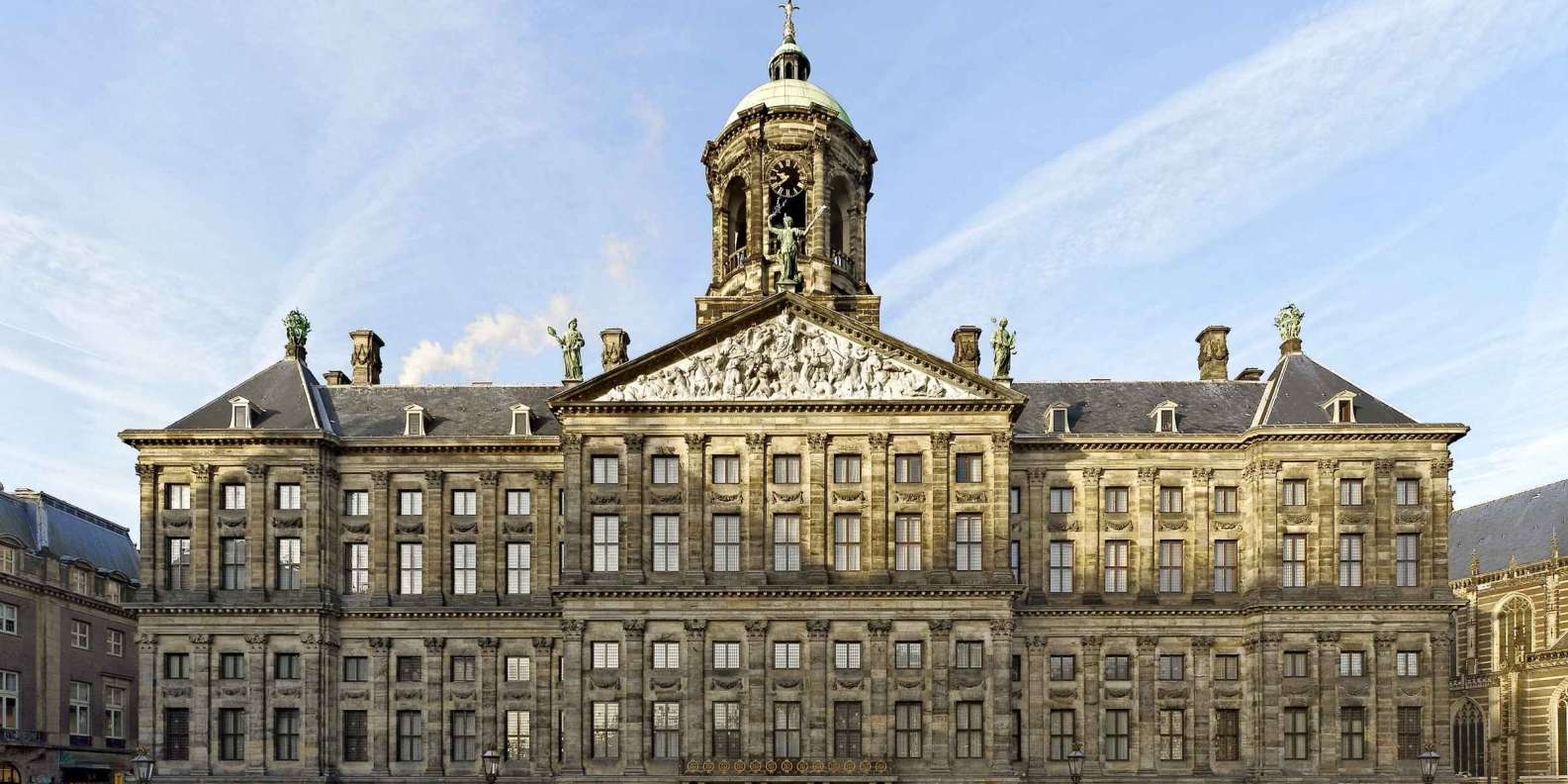
The Royal Palace which housed the Society of Suriname, the governing body of the colony of Suriname. The Society did so on behalf of the colony’s owners, among which was the city of Amsterdam itself.

The headquarters of the Dutch West India Company. The Dutch state awarded the WIC with a monopoly on the trafficking of more than half a million enslaved humans from several parts of Western and Central Africa to The Americas.
The gross injustices of the transatlantic slave trade still define, defend and shape our current economic, political, social, religious and material worlds.
Dutch success wasn’t just economic. There was a cultural flowering (Rembrandt, Vermeer). There was urbanization – the building of great towns and cities. There was a civic and political stability built around decentralized power. There was a relatively egalitarian culture – until the 19th century, there were no statues of heroes on horseback in Holland. There was also moral restraint. Dutch Calvinism was on high alert for the corruption that prosperity might bring. It encouraged self-discipline and norms that put limits on the display of wealth.
Again, a very a-historical analysis/description. The “Dutch Golden Age” of which you are referring, ignores the foundation upon which it was built: the slave trade. Thus It is hard to accept your description of this society being “civil”, “egalitarian” and of “moral restraint”. (No statues not withstanding.)
Such descriptions make invisible the brutality and horror of the slave trade. As if the terror and trauma of it all need not be mentioned, let alone be described.
The next liberal leap forward occurred in Britain. FYI: British involvement in the transatlantic slave trade began in 1562 and by the 1730s Britain was the world’s biggest slave-trading nation. In the Glorious Revolution of the late 1680s, a Dutchman, William of Orange, became King of England and helped import some of the more liberal Dutch political institutions, ushering in a period of greater political and religious moderation. Once again, you see the same pattern: Technical and economic dynamism goes hand in hand with cultural creativity, political reform, urbanization, a moral revival and, it must be admitted, vast imperialist expansion. No! Imperialist expansion needs to be centered! Cultural creativity, political reform, urbanization and moral revival for whom? (Certainly not women.) British inventors and tinkerers like James Watt perfected the steam engine. From 1770 to 1870 real British wages rose by 50%, and over the first half of the 19th century, British life expectancy increased by about 3.5 years. You are cherry-picking. The Industrial Revolution did bring wealth. But, it was wealth produced on the exploitation of labor by men, women and children.

The great reform acts in the 1800s gave more people the right to vote and reduced political corruption. The rise of, for example, the evangelical Clapham Sect in the early 19th century was part of a vast array of social movements led by people who sought to abolish the slave trade, reduce child labor, reform the prison system, reduce cruelty to animals, ease the lives of the poor and introduce codes of propriety into Victorian life. To reduce the abolition of slavery to a social reform movement minimizes slavery’s impact on every aspect of global culture: past and present. America was next, and the pattern replicated itself: new inventions like the telephone and the electric lightbulb. People flooding into the cities. The driving force behind the Black mass movement into the cities was to escape racial violence, pursue economic and educational opportunities, and obtain freedom from the oppression of Jim Crow. During the 20th century, American culture dominated the globe. Thanks in part to the postwar American liberal order, living standards surged. Why did living standards increase? Identify the rights revolutions that were occurring. As Zakaria notes, “Compared to 1980, global GDP had nearly doubled by 2000, and more than tripled by 2015.” The global GDP is not a reflection on the distribution of wealth. (The net worth of the world’s five richest individuals, all men, has shot up from $405 billion to $869 billion since 2020. That is a rate equivalent to about $14 million per hour. This cannot be dismissed.)
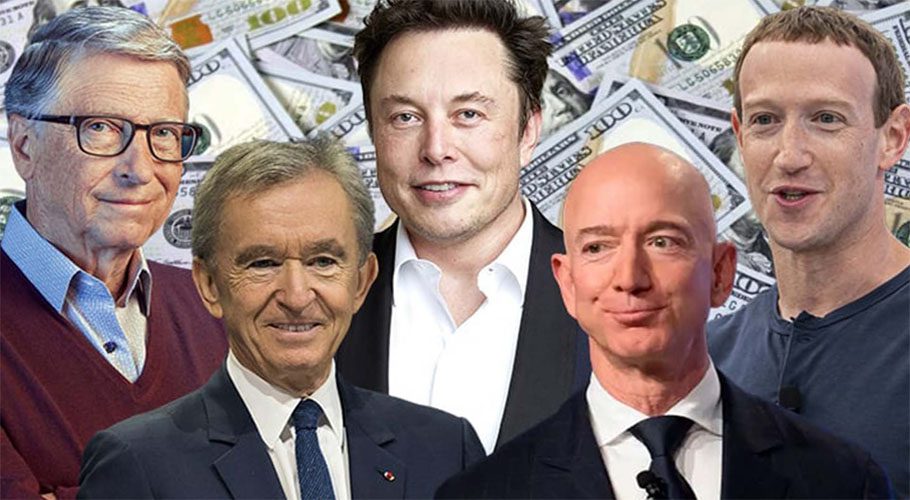 Larry Ellison, Bernard Arnault, Elon Musk, Jeff Bezos, Mark Zuckerberg
And yet for all its benefits, liberalism (which are…) is ailing and in retreat in places like Turkey, India, Brazil and, if Trump wins in 2024, America itself. You are conflating liberalism with democracies. These nations all identify as having representational democracies with free elections. Saying so does not make it so. Zakaria’s book helped me develop a more powerful appreciation for the glories of liberalism, and also a better understanding of what’s gone wrong. The glories of liberalism for whom?
I’m one of those people who subscribes to Austrian psychiatrist Viktor Frankl’s doctrine: “Man’s search for meaning is the primary motivation in his life.” To feel at home in the world, people need to see themselves serving some good – doing important work, loving others well, living within coherent moral communities, striving on behalf of some set of ideals. This paragraph does not fit. You are trying to make an argument that liberalism creates “progress”. Introducing vague ideas regarding the “meaning of life” make your argument a-contextual. And, more importantly, material conditions irrelevant.
The great liberal societies that Zakaria describes expanded and celebrated individual choice and individual freedom. But when liberalism thrived, that personal freedom lay upon a foundation of commitments and moral obligations that precede choice: our obligations to our families, to our communities and nations, to our ancestors and descendants, to God or some set of transcendent truths. This is a new and different argument. Here you are introducing the concept that liberalism works when its foundation lays on the interest of the greater good of the other. Yet, obligations to family, community, nation, ancestor, Gods, are often conflicting or mutually exclusive. So, as the reader, I am confused. For example, why is it okay for Nestle to privatize water?

Image detail from book cover: “The Age of Commodity: Water Privatization in South Africa”. Editors Greg Ruiters and David McDonald.
Over the past few generations, the celebration of individual freedom has over spilled its banks and begun to erode the underlying set of civic obligations. Especially after World War II and then into the 1960s, we saw the privatization of morality – the rise of what came to be known as the ethos of moral freedom. Give examples, please. Americans were less likely to assume that people learn values by living in coherent moral communities. They were more likely to adopt the belief that each person has to come up with his or her own personal sense of right and wrong. As far back as 1955, columnist Walter Lippmann saw that this was going to lead to trouble: “If what is good, what is right, what is true, is only what the individual ‘chooses’ to ‘invent,’ then we are outside the traditions of civility,” he wrote. What is your point? Are you talking about cultural issues? Right and wrong in what context? What did Lippmann mean by “civility”. (It is interesting that you quote Lippmann: he believed that “intellectual elites” undermined democracy. Those elites being Liberals.)
Trust is the faith that other people will do what they ought to do. That is not trust. That is expectation, assumption and at times, hope. It reeks of self-interest. Trust is believing that someone will not hurt you. When there are no shared moral values and norms, then social trust plummets. How then do we live with difference? People feel alienated and under siege, and, as Hannah Arendt observed, lonely societies turn to authoritarianism. This statement reduces and distorts Arendt’s analyses. People eagerly follow the great leader (Who decides if a leader is great?) and protector, the one who will lead the us/them struggle that seems to give life meaning. The Germans considered Hitler a great leader and followed him because their economy was in ruins following the global Great Depressions and The Treaty of Versailles’ demand for financial restitution. They believed he would bring an end to Germany’s humiliation and restore The Fatherland to its glorious Nordic imagined past and; as a nation of a master race of racialized aryans.
During our current moment of global populism, the liberal tradition is under threat. Positioning populism and liberalism as binary constructs a false equivalency. Many people have gone economically nationalist and culturally traditionalist. Around the world, authoritarian moralists promise to restore the old ways, the old religion, national greatness. It is not just “authoritarian moralists” who make such promises. The defense of and the return to the “old ways” are used by conservatives, traditionalists, moderates and neoliberals. It is an argument often used by those who are opponents of radical change. “There are certain things which are more important than ‘me,’ than my ego – family, nation, God,” Viktor Orban declared. Such men promise to restore the anchors of cultural, moral and civic stability, but they use brutal and bigoted strongman methods to get there. Again, not just the strategies used by “brutal and bigoted strongman”. You are contributing to the binary, either/or thinking that is endemic to Western thought.
President Biden tried to win over the disaffected by showering them with jobs and economic benefits. It doesn’t seem to have worked politically because the real absence people are feeling is an absence of meaning, belonging and recognition. Unsophisticated argument. There exists, as never before, a real lack of healthy material conditions: lack of living wages, food price gouging, rent gouging, unhealthy neighborhoods, job insecurity, the gig economy, and more. You cannot have it both ways. You cannot write a piece about liberal economics and use tropes of happiness to defend your argument.
This election year, in the United States and around the globe, will be about whether liberalism can thrive again. No. The U.S. election is not about whether or not “liberalism can thrive”. This election is about whether or not Fascism continues to thrive. The battle is between the Left and the Right. Zakaria’s book will help readers feel honored and grateful that we get to be part of this glorious and ongoing liberal journey. He understands that we liberals can’t just offer economic benefits; we also have to make the spiritual and civic case for our way of life. He writes: “The greatest challenge remains to infuse that journey with moral meaning, to imbue it with the sense of pride and purpose that religion once did – to fill that hole in the heart.” I would encourage you to read the message of His Holiness, Pope Paul VI, for the Celebration of the Day of Peace on January 1, 1972.
IF YOU WANT PEACE, WORK FOR JUSTICE
There’s glory in striving to add another chapter to the great liberal story – building a society that is technologically innovative, commercially daring, with expanding opportunities for all; building a society in which culture is celebrated, families thrive, a society in which the great diversity of individuals can experience a sense of common purpose and have the space and energy to pursue their own adventures in living. Blah, blah, blah…meaningless, empty statement.
Final Comments:
Fareed Zakaria believes in progress, the idea that history has a tendency and/or movement toward freedom. And, that it proceeds in the direction of improved material conditions and a better life for all people, eventually. This appears to be your standpoint. Such a standpoint often legitimizes and ignores violence: historical and modern day. And, racial violence especially. Your piece is a classic example.
Your piece is a-historical and a-contextual, thus lacking critical thought.
Of course, an opinion piece is just that, an opinion. But, it has credibility only if one’s point is clear, well researched and has deep levels of argument.
Final Grade: 

 Beth Kwiatek
One thought on “THE OMISSIONS AND LIES OF LIBERALISM BY A WHITE CONSERVATIVE FAVORITE.”